
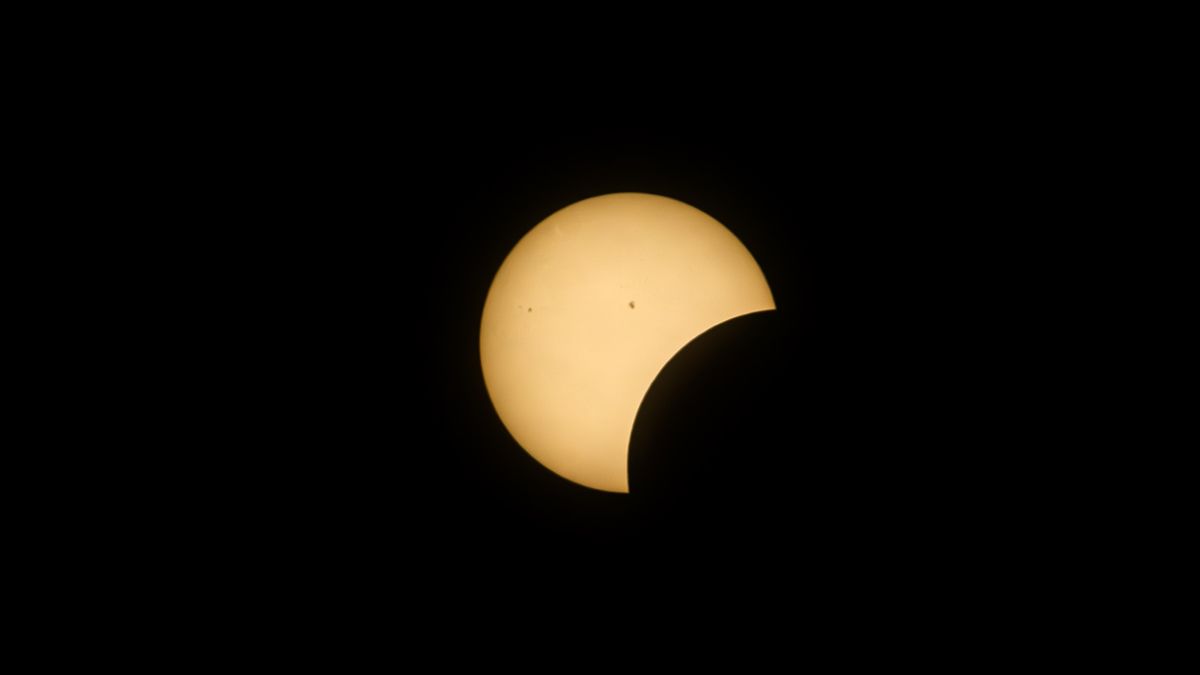
On March 29, 2025, skywatchers will witness a spectacular partial solar eclipse, and this event comes with an added bonus—the chance to spot sunspots on the solar surface. These dark patches on the Sun are regions of intense magnetic activity and can be seen with proper eye protection during the eclipse.
What Are Sunspots?
Sunspots are cooler areas on the Sun’s surface caused by powerful magnetic fields. They appear as dark blotches against the bright solar disk and can grow larger than Earth itself. During a solar eclipse, when the Moon partially covers the Sun, these sunspots become easier to observe.
How to Safely Spot Sunspots
Since looking directly at the Sun can cause serious eye damage, follow these safe viewing methods:
-
Solar Viewing Glasses – Use ISO-certified eclipse glasses to protect your eyes while observing the Sun.
-
Telescope with Solar Filters – A properly equipped telescope or binoculars with solar filters can reveal detailed structures of sunspots.
-
Pinhole Projection – Create a simple pinhole projector to safely project an image of the Sun onto a surface.
Why This Eclipse is Special
This eclipse occurs during a period of heightened solar activity as the Sun approaches its peak in the 11-year solar cycle. More sunspots and even possible solar flares may be visible, offering a rare glimpse into the dynamic nature of our star.
Don’t Miss This Celestial Show!
The March 29 partial solar eclipse is not just a chance to see the Moon take a bite out of the Sun—it’s also an opportunity to witness the ever-changing face of our star. With the right equipment and safety precautions, you may catch a glimpse of sunspots in action, revealing the raw power and beauty of the Sun


0 Comments